 Dobbelt Op
How to win 2048
Pick a corner and keep your biggest tile there. Swipe mostly in the two directions that push towards that corner, use a third when you have to, and avoid the fourth. Keep the edge next to the big tile full, so nothing small can slip in beside it, and line the numbers up along that edge from big to small. Then each new merge rolls down the line into the next one.
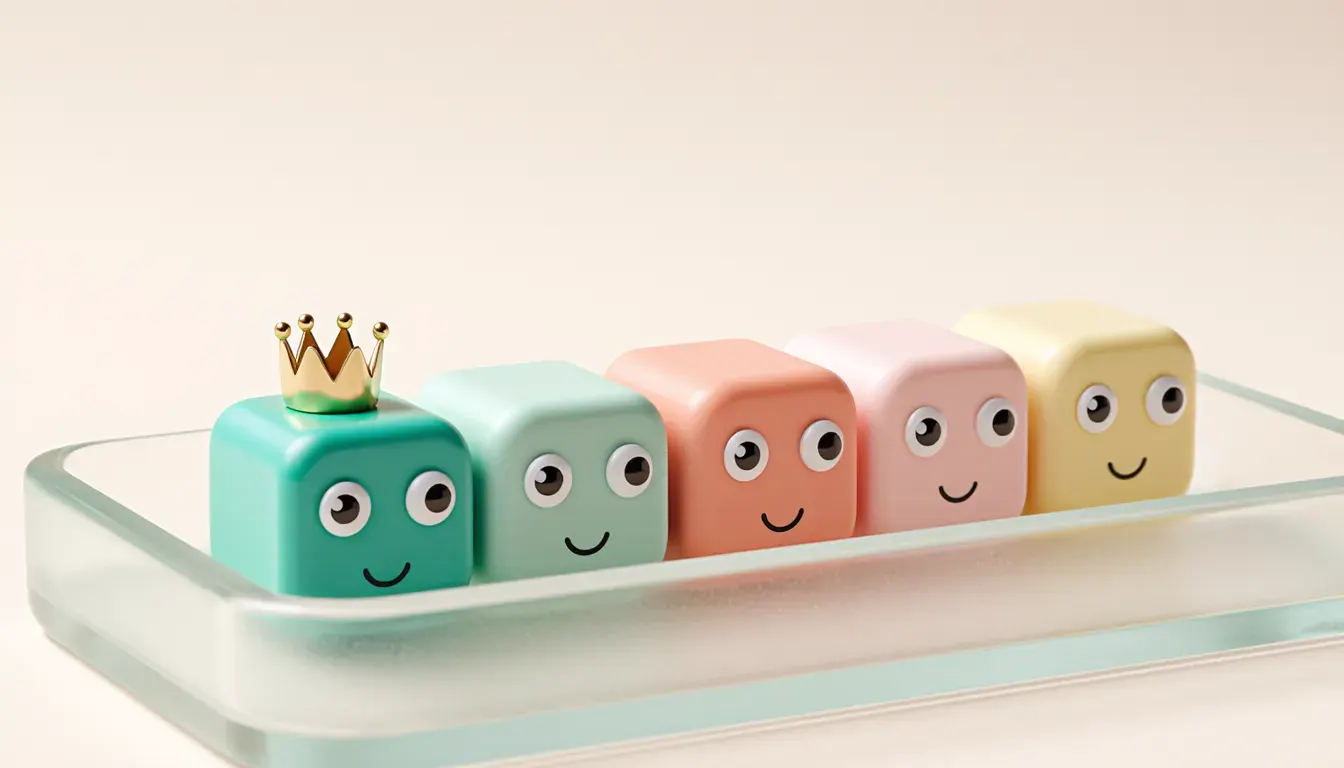
The corner strategy at a glance
1Pick a corner
Your biggest tile lives here. This guide uses bottom left.
2Swipe two ways
Down and left most of the time, right when nothing else moves, up only in an emergency.
3Keep the edge row full
A full row can't slide sideways, so the tile in the corner stays put.
4Build a snake
Big to small along the bottom row, then back the other way in the row above.
Why the corner works
Every swipe adds a new tile in a random empty cell. In the original game it's a 2 nine times out of ten and a 4 the rest of the time, and you never get to choose where it lands. So the trick is to keep the important part of the board out of reach.
A tile in a corner only has two neighbours. If the row it sits in stays full, a swipe along that row can't move it, and a new 2 has nowhere to drop in next to it. Your big tile stays put while you build the next one.
The moves, step by step
The example uses the bottom-left corner. Any corner works, as long as you stick to it.
- Down and left, most of the time. The tiles pile up in the bottom row, with the biggest one pressed into the corner.
- Right, when down and left won't move anything. It's safe as long as the bottom row is full, because then that row can't slide sideways.
- Up, only when nothing else moves. It lifts the bottom row, and a 2 or a 4 can land in your corner. Swipe down straight after and hope the corner is still free. It happens to everyone, and the game isn't over when it does, but it gets a lot harder.
Build a chain along the edge
Put the numbers in order away from the corner: 256, 128, 64, 32 along the bottom row, then carry on in the row above, going back the other way. People call it a snake.
When you make a 32 next to the 32 at the end of the line, the two merge into 64, which sits next to the 64, and so on back towards the corner. With a good chain, one or two swipes turn a pile of small tiles into the next big one.
One merge sets off the next
Mistakes that end games
- Grabbing a merge in the middle of the board because it's there. If it pulls your big tile out of the corner, it costs more than it gives.
- Leaving 2s and 4s scattered around. Merge them early, near the end of your chain, before they fill the board.
- Swiping fast when the board is nearly full. That's when one careless move breaks the chain. Slow down and look at where the new tile can land.
- Starting over when the corner goes wrong. Often you can build a new big tile next to the old one and slide it back in.
After 2048
Making the 2048 tile wins the game, but the original lets you keep going, towards 4096 and higher. The same strategy holds; you just need more patience, because the board fills up long before the big tiles meet.
If you only want the classic game, Gabriele Cirulli's original is free to play in the browser on play2048.co. And if you want something different, here are five games like 2048.
Does it work in Dobbelt Op?
I made Dobbelt Op, a number puzzle for iPhone with the same swipe-and-merge rules and two twists, so I've tested this more than I'd like to admit.
In the With attitude mode, on a 4×4 board, the corner still wins games, but the tiles have moods. A grumpy tile refuses to move for two turns, a glad joker merges with the first tile it bumps into and doubles it, and a sleepy tile won't merge until something merges next to it. A joker landing at the end of your chain is a gift. A grumpy tile in the corner row means you wait it out.
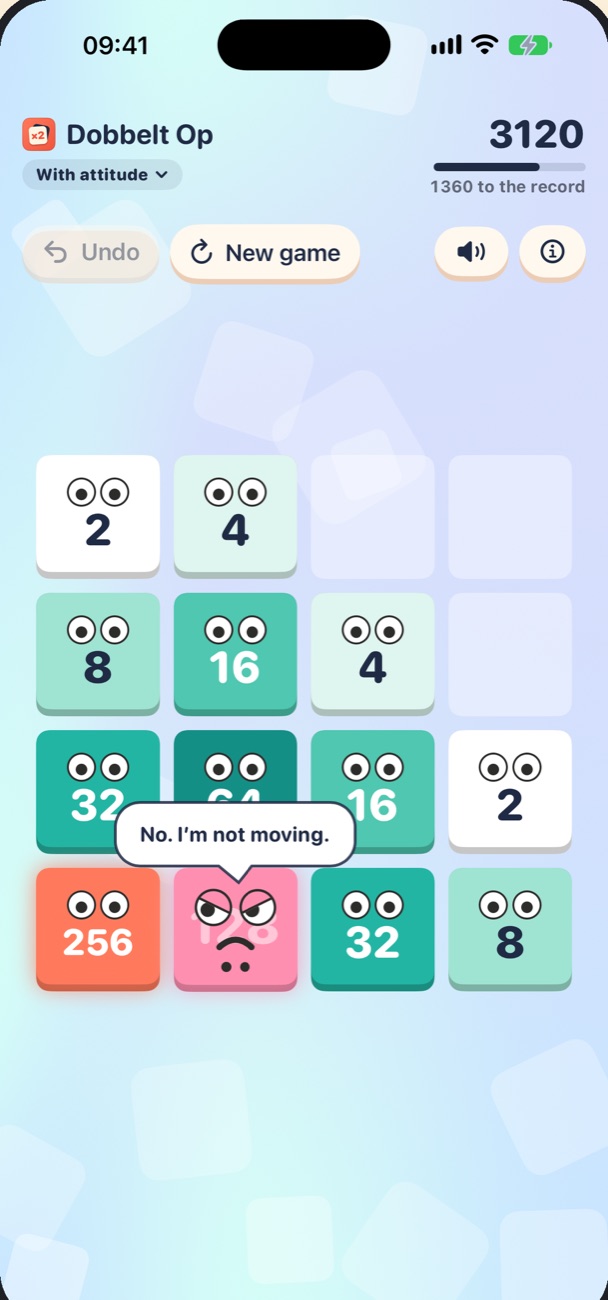 1Biggest tile in the corner2Grumpy: won't move for two turns
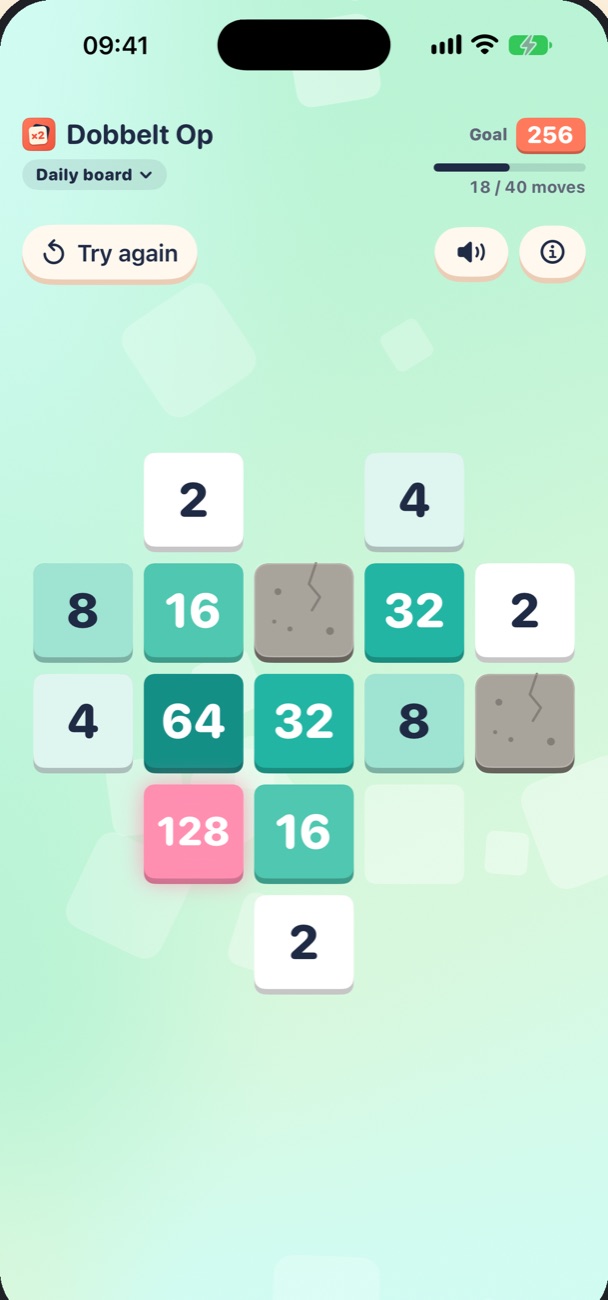 3Stones never move: build against them4Today's goal and your moves
- Biggest tile in the corner
- Grumpy: won't move for two turns
- Stones never move: build against them
- Today's goal and your moves
The Daily board is a 5×5 board cut into a new shape every day, with grey stones that never move and never merge, and a goal to reach before your moves run out (128 on Monday, up to 512 at the weekend). There's no undo. The shape decides where your corner is, and a stone makes a good wall to build against, since it never moves. Everyone gets the same tiles in the same order that day, so if a friend solved it, you can too.
Dobbelt Op costs $2.99, once. No ads, no account and nothing to buy.